
Why One-Size-Fits-All Learning Never Worked (And What Actually Does)
The Hard Truth About How We’ve Been Teaching
Here’s what I learned after fifteen years of watching brilliant kids struggle in my classroom: our education system was designed for a brain that doesn’t exist. We built curricula around the mythical “average learner” and then wondered why so many students felt lost, bored, or broken.
The science backs this up. Neural pathways form differently in every single brain. Some students think in pictures, others in sequences, and still others through movement and touch. Yet we keep teaching as if every child processes information through the exact same cognitive doorway.
I’ve seen the kid who couldn’t sit still during math suddenly solve complex problems while walking around the room. I’ve watched the quiet student who seemed disengaged light up when given time to process before sharing. These aren’t exceptions. They’re the norm.
The Three Learning Pathways That Actually Matter
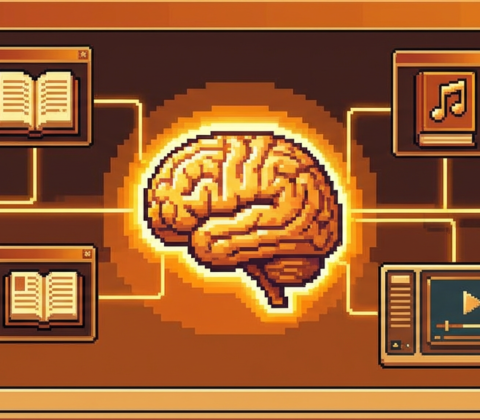
Forget the oversimplified “learning styles” you’ve heard about. Real neuroscience research shows us three distinct processing pathways that determine how information sticks in long-term memory.
The visual-spatial pathway processes information through images, patterns, and spatial relationships. These learners need to see the big picture first, then zoom into details. They thrive when you show them mind maps, diagrams, or color-coded systems. Math concepts click when they can visualize equations as balanced scales or geometric relationships.
The auditory-sequential pathway processes through sound patterns and logical sequences. These students thrive on verbal explanations, discussions, and step-by-step instructions. They often talk through problems out loud and remember information better when it rhymes or has rhythm. They need to hear why before they tackle how.
The kinesthetic-tactile pathway learns through movement and hands-on experience. These learners think with their bodies. They need to manipulate objects, act out scenarios, or move while processing. Traditional “sit still and listen” classrooms are torture chambers for these kids, but give them clay to model molecular structures and watch them soar.
Why Sequence Is Everything (And How We Get It Wrong)
Here’s where most educational design fails spectacularly: we ignore the natural sequence of how brains actually acquire new skills. We rush to abstract concepts before building concrete foundations. We skip the messy exploration phase and jump straight to formal procedures.
Real learning follows a predictable pattern: concrete experience, reflective observation, abstract concepts, then active experimentation. Skip any step, and you lose learners along the way. This isn’t opinion. This is how neural networks strengthen and connect.
Take fractions. Most curricula start with abstract symbols and procedures. But brains need to manipulate actual objects first. Cut up pizzas. Fold paper. Share candy bars. Only after extensive concrete experience should we introduce the formal notation. The kids who “get” fractions immediately? They’ve already had rich experiences dividing things in their daily lives.
The same principle applies to reading, science, history, and every other subject. Concrete before abstract. Experience before explanation. Always.
Building Systems That Flex Without Breaking
So how do we design learning systems that honor these differences without creating chaos? The answer lies in structured flexibility, what I call “choice within boundaries.”
Start with non-negotiable learning objectives. Every student needs to master the same essential skills and knowledge. But the path to mastery can vary dramatically. Create multiple ways to engage with content, process information, and demonstrate understanding.
For a unit on photosynthesis, offer visual learners detailed diagrams and infographics. Give auditory learners podcasts and discussion opportunities. Let kinesthetic learners build models or act out the process. All paths lead to the same destination: deep understanding of how plants convert sunlight to energy.
Assessment becomes the great equalizer. Focus on what students know and can do, not how they got there. Some will write essays, others will create presentations, still others will build working models. The standard remains high, but access points multiply.
The Missing Piece: Teaching Students About Their Own Brains
Here’s the idea that transformed my teaching: teach students how they learn best. Make thinking about thinking explicit. Help them recognize their own patterns and preferences.
When students understand their cognitive strengths, they become partners in their education rather than passive recipients. They can advocate for what they need. They can choose appropriate strategies when stuck. They develop genuine confidence instead of borrowed self-esteem.
I started having “learning conferences” with my students. We’d examine their work together, looking for patterns. “I notice you always draw pictures when solving word problems. That visual processing is a real strength. Let’s build on that.” Simple recognition, but it changed everything.
Students began asking for different types of practice problems. They started forming study groups based on complementary learning preferences. They stopped seeing struggles as personal failings and started seeing them as mismatches between task and approach.
This isn’t about lowering standards or making excuses. It’s about helping every brain find its optimal learning conditions. When we do this right, achievement soars across all student populations.
The most exciting part? Once students understand how their brains work, they carry that knowledge into every learning situation. We’re not just teaching content. We’re teaching them how to teach themselves for life.
What patterns have you noticed in your own learning? I’d love to hear about the moments when something finally clicked for you, and what conditions made that breakthrough possible.
Comments are Disabled