Microschools Hit 1 Million Students—But Does Small Really Mean Better? What the Research Actually Shows
The Microschool Moment We’re Living Through
A million students. That number landed differently for me than it might for you, so let me break down why it matters. Back in 2021, roughly 300,000 students were learning in microschool settings across the United States. By 2025, that number quadrupled. We’re not talking about a niche experiment anymore. We’re talking about a shift in how American families are choosing to educate their kids.
A lot of this growth came from something unexpected: those pandemic learning pods that parents threw together in living rooms and coffee shops never actually dissolved. Some became permanent fixtures. Others sparked families to seek out smaller, more intentional learning communities. When Arizona’s Empowerment Scholarship Account program distributed over $330 million to families by mid-2025, with roughly 18 percent of those funds flowing toward microschool tuition, it became clear that public policy was actively fueling this movement. This wasn’t just wealthy families experimenting anymore.
Here’s What I’m Actually Curious About: Does It Work?
I’m going to be honest with you. When something grows this fast and captures this much attention, my teacher brain immediately asks the question every educator should ask: what does the evidence say? Not the marketing materials from microschool founders. Not the glowing parent testimonials. What do the peer-reviewed studies actually show?
A 2025 study published in Educational Researcher looked at outcomes from 14 different microschool networks. The researchers tracked student progress across multiple domains and found something interesting, though not simple. Students showed statistically significant gains in self-regulation skills. That’s real. Self-regulation, the ability to manage your own behavior, emotions, and attention, is foundational. It’s what lets you sit through a difficult math problem without giving up, or navigate a group project when you’re frustrated with your teammates. But here’s the complicated part: when they looked at standardized academic achievement measures, the results were mixed and inconsistent across networks. Some microschools showed solid gains. Others didn’t. There wasn’t a clear, universal pattern.
The Small Class Size Question Everybody’s Asking
This is where I need to share something that surprised a lot of people when it came out. John Hattie’s Visible Learning Hattie effect size database is the gold standard for understanding what actually moves the needle in education. Hattie updated this massive database in 2024, synthesizing over 1,800 meta-analyses about teaching and learning. He ranks educational interventions by their effect size, basically how much bang you get for your buck.
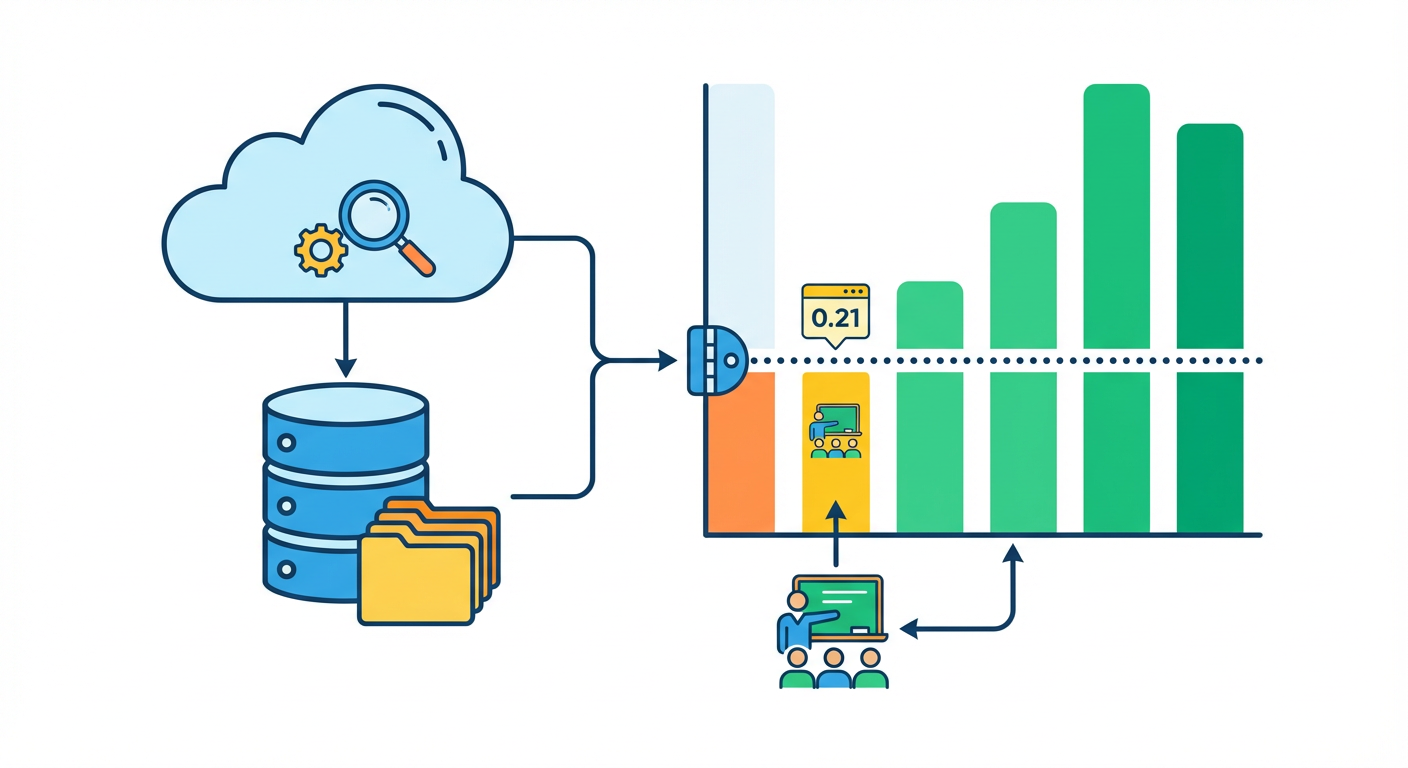
Small class size came in at an effect size of 0.21. Here’s what that means in plain language: it helps, but not as much as most people assume. Hattie has a concept he calls the “hinge point,” an effect size of 0.40. Below that line, the impact is real but modest. Above it, you’re looking at an intervention that creates meaningful, noticeable shifts in student outcomes. Small class size sits below that threshold.
Now, this doesn’t mean small classes don’t matter. It means that simply reducing the number of students in a room, by itself, is not some magic lever that automatically creates better learning. Something else has to happen inside that smaller space.
What Actually Makes a Small Setting Powerful
This is where I get excited, because this is where the science connects to something real teachers know in their bones. The magic in a microschool or a small learning community isn’t just the small class size. It’s what becomes possible because of it.
When I taught calculus to 28 students, I could barely learn everyone’s name before October. I couldn’t track which students confused chain rule with product rule consistently, or who got anxious on tests but thrived with verbal explanations. I couldn’t personalize the pacing or the approach. That’s not a judgment on my effort. It’s a simple fact about cognitive load and time. With smaller groups, teachers can actually see their students. They can notice patterns. They can adjust.
The 2025 microschool research found that self-regulation gains were consistent across networks. Self-regulation improves in environments where adults know you well enough to notice when you’re struggling, where relationships are stable over time, and where the pace allows for genuine interaction. That happens in small settings. But here’s the catch: it only happens if the teaching and curriculum design are intentional. Smallness is necessary but not sufficient.
The Accountability Gap Nobody’s Talking About
Here’s something that keeps me up at night. The Cato Institute analyzed state microschool regulations in 2025 and found that only 11 states had any formal accountability or academic outcome reporting requirements for microschools receiving public funds. Eleven. That means a family in most states could use a scholarship account or voucher to send their child to a microschool, and there would be no standardized way to know whether that student is actually learning.
I’m not saying microschools are unaccountable. Many excellent microschool networks track their own outcomes rigorously. But when public money is flowing toward education, public transparency matters. Not because small schools are inherently suspicious, but because every child deserves oversight. When my daughter goes to school, I want to know there are independent eyes on whether that education is actually working.
The National Microschooling Center research and resources has been publishing data on outcomes, and that’s part of the solution. But it’s voluntary. As microschools become mainstream education for more families, regulation and transparent reporting should follow.
So What’s the Actual Answer?
Small-group education can absolutely deliver on its promise. But it doesn’t automatically. A microschool with brilliant teachers, thoughtful curriculum design, and a strong culture of relationships will outperform a traditional large classroom in many measurable ways. A microschool that’s just a smaller version of traditional school with fewer resources? That’s a different story.
If you’re considering a microschool for your child, don’t just look at the size. Ask about teacher training and retention. Ask what their student outcomes actually are and how they measure them. Ask how they handle students who are struggling. Ask about their approach to social-emotional learning and academic challenge. The smallness opens a door. What matters is what happens through it.
What’s your experience been with smaller learning communities? Whether you’re a parent exploring options, a teacher thinking about this shift, or a student in a microschool right now, I’d love to hear what you’re seeing on the ground. The research tells us part of the story. The lived experience tells us the rest.
Comments are Disabled